Agnes Williams: The New Zealand Artist Whose Quiet Legacy Still Deserves Attention

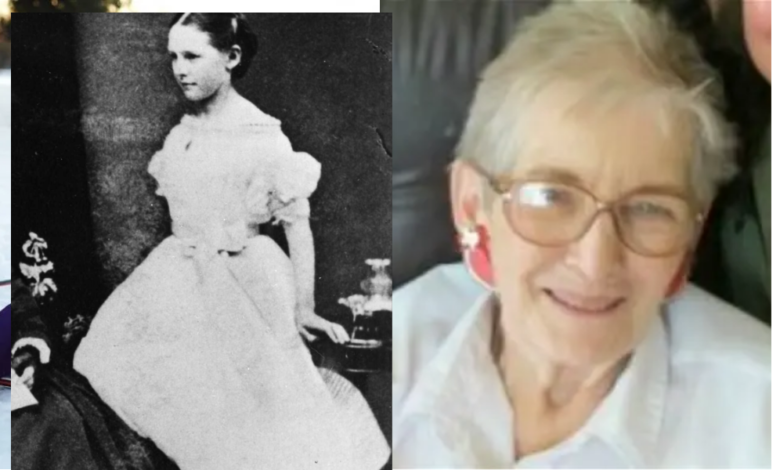
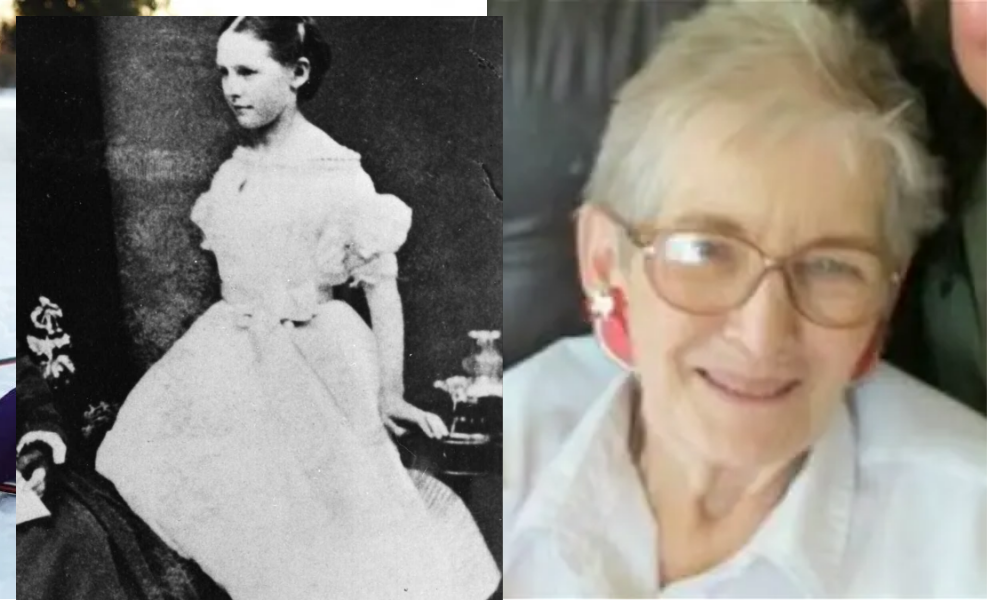
Discover the life, family background, artistic legacy, and lasting cultural importance of Agnes Williams, the New Zealand artist remembered for her landscapes, pioneer influence, and historical place in Aotearoa.
When people search for agnes-williams, they are often looking for more than a name. They want to know who she was, why her story matters, and how someone with a relatively quiet public profile can still hold a meaningful place in history. Agnes Lydia Williams was a New Zealand artist born in the Bay of Islands in 1855. She came from a notable family connected to both missionary Henry Williams and James Busby, later married Thomas Sydney Williams in 1882, lived near Ruatoria in Kaharau, and left behind artwork as well as papers that help preserve her place in New Zealand’s historical memory. For broader context on her family background, one useful starting point is Henry Williams.
| Quick Bio | Details |
|---|---|
| Full Name | Agnes Lydia Williams |
| Known For | New Zealand artist |
| Birth | 9 July 1855 |
| Birthplace | Bay of Islands, New Zealand |
| Death | December 1940 |
| Residence | Kaharau, near Ruatoria |
| Spouse | Thomas Sydney Williams |
| Family Links | Granddaughter of Henry Williams and James Busby |
| Legacy | Landscape drawings, family papers, local historical influence |
Why Agnes Williams Still Attracts Interest Today
Some names become famous because they dominate headlines. Others remain important because they quietly connect art, family heritage, settlement history, and regional memory in a way that becomes more valuable over time. Agnes Williams belongs to the second group. She may not be a globally recognized celebrity in the modern entertainment sense, yet her name continues to draw attention because it sits at the intersection of New Zealand art, colonial-era family history, and women’s contributions that were often under-documented in their own time. That combination makes her especially interesting for readers who enjoy discovering overlooked historical figures rather than only reading about the most public personalities.
There is also something compelling about the way her story survives. Many nineteenth-century women are remembered only through the achievements of men around them, but Agnes Williams has traces of her own legacy preserved through artwork, archival papers, and local accounts. That matters. It means readers are not simply reconstructing her through family association. They are also seeing evidence of her own creative life. In an online world crowded with loud, short-lived fame, someone like Agnes Williams stands out for the opposite reason. Her story has endurance, depth, and historical texture.
Early Life in the Bay of Islands
Agnes Lydia Williams was born on 9 July 1855 in the Bay of Islands, a region deeply woven into early New Zealand history. The Bay of Islands was not just a scenic setting. It was one of the most significant contact zones in the story of nineteenth-century Aotearoa, and being born there placed Agnes inside a world shaped by religion, settlement, politics, kinship networks, and cultural change. Her birth into the Williams and Busby families gave her a unique place within that world from the very beginning.
Her father was John William Williams, and her mother was Sarah Williams, née Busby. Through them, Agnes was linked to two historically notable lines. Her grandfather Henry Williams is remembered as a major missionary figure in New Zealand history, while James Busby is a significant political name associated with the country’s early colonial administration and the lead-up to the Treaty era. These connections do not mean Agnes should be seen only as a descendant of important men, but they do help explain why her life attracts researchers, historians, and curious readers. She belonged to a family already embedded in the foundational narratives of New Zealand.
Still, family background alone does not explain the interest around her. Many descendants of prominent families fade into obscurity. Agnes Williams remains notable because she appears not merely as a relative in a family tree, but as a person whose own life intersected with art, faith, settlement, and regional service. That gives her biography a richer human dimension.
A Family Heritage That Shaped Her World
It is difficult to understand Agnes Williams without understanding the atmosphere of duty, religion, and social responsibility that surrounded the Williams family. Families with strong missionary roots often passed down more than status. They passed down habits of service, literacy, discipline, and community involvement. In Agnes’s case, those values seem to echo through the descriptions of her later life, especially in accounts that emphasize hospitality, influence, and religious commitment in the East Coast district.
This background may also help explain why her legacy feels broader than art alone. Some historical women artists are remembered only for their paintings or drawings. Agnes appears to have occupied several roles at once. She was part of a respected family line, a woman rooted in community life, and a creative figure whose artistic works became historical documents in their own right. That layered identity gives modern readers a fuller portrait. She was not operating in a narrow lane. She seems to have been one of those people whose life touched many different parts of local society.
Another reason her family story matters is that it places her in a wider historical chain. New Zealand history often becomes easier to understand when viewed through families who lived across major transitions. Agnes’s life effectively bridges generations. She was born during a formative period of colonial development, lived through changing regional realities, and died in 1940 with enough local significance to be remembered publicly as a pioneer figure. That arc alone makes her a worthwhile subject for a long-form blog article.
Marriage, Kaharau, and a Life on the East Coast
In 1882, Agnes Williams married Thomas Sydney Williams, her cousin and the son of Edward Marsh Williams. After marriage, they lived in Kaharau near Ruatoria, and that move shaped the rest of her life story. Instead of being remembered as a figure of urban artistic circles, she became associated with land, locality, church life, and East Coast settlement. That setting is central to her identity. It is where her name gained its strongest community meaning.
Accounts of her later years suggest that Agnes was far more than a private resident. She and her husband helped establish the Kaharau Church, and she has also been described as a medical advisor for the area. Those details are especially striking because they show a woman whose practical importance extended beyond family and art. In communities where distance and isolation shaped daily life, a trusted figure with knowledge, care, and presence could become deeply valued. That appears to be part of how Agnes was remembered.
The East Coast chapter of her life gives modern readers the most emotionally vivid version of her story. It turns her from a historical name into a lived personality: a woman rooted in a place, known to a community, active in faith, and apparently associated with generosity and influence. Those are the details that make a biography feel alive.
Agnes Williams as an Artist
Agnes Williams is identified as a New Zealand artist, and while she is not among the most internationally famous names in art history, that does not reduce the importance of her work. In fact, artists like Agnes often become more interesting with time because their surviving work preserves not only aesthetic choices but also ways of seeing landscape, place, and memory in a specific era. Her drawings, especially those connected with the Bay of Islands, carry this kind of value.
Several of her drawings are held by the Auckland War Memorial Museum Tāmaki Paenga Hira. Among the works mentioned are Tapeka (Bay of Islands), Waitangi and Islands off Paihia & entrance to Kawakawa River, Waitangi. Even their titles tell a story. These are not abstract works detached from location. They are anchored in place. They reflect a visual relationship with the Bay of Islands, one of the most historically resonant landscapes in New Zealand. Her art therefore works on two levels at once. It is creative expression, but it is also a visual record of environment and memory.
That matters for readers and researchers today because landscape art is often one of the most intimate ways historical figures leave evidence of attention. A drawing reveals what someone paused to notice. It shows what seemed worth preserving. In that sense, Agnes Williams’s art is not just decoration from the past. It is a form of witness. It captures a relationship between person and place that written biography alone cannot fully express.
More Than Paintings: Papers, Letters, and Archival Memory
One of the strongest reasons Agnes Williams deserves renewed attention is that her legacy survives in more than one form. Her papers, letters, and related archival materials are held by the National Library of New Zealand, which means her life can be studied through documentary traces rather than legend alone. That gives writers, historians, and family researchers something solid to engage with.
Archival survival is important because it protects people from vanishing into oversimplified summaries. Without papers and records, a woman like Agnes might be reduced to a single sentence: daughter of this family, wife of that man, artist of a few works. With archives, her life gains texture. There are connections, contexts, and traces that invite deeper interpretation. For modern blog readers, this also means the topic is stronger than it first appears. Agnes Williams is not simply an obscure name. She is a subject with historical material behind her.
This is also why her keyword has blogging potential. People increasingly search for biographies that feel fresh, underexplored, and meaningful. An article on Agnes Williams can satisfy curiosity while also offering readers something they are unlikely to find in repetitive celebrity coverage. That makes the topic both distinctive and useful for a content site that wants originality. You could even connect this kind of piece naturally with other celebrity biographies or historical profiles on your blog.
How Her Community Remembered Her
One of the most revealing records about Agnes Williams comes from a 1940 newspaper account that described her as a pioneer figure and emphasized her influence in the Waiapu area. That kind of obituary-style remembrance says a lot. It shows how she was seen by those near her at the end of her life: not as a marginal figure, but as someone whose presence had genuinely mattered. The language around her hospitality, graciousness, and religious spirit suggests that her legacy was personal as much as historical.
This public remembrance also helps answer an important question: why should readers today care? The answer is that lives like hers reveal how communities are built. Not always by famous politicians or headline-makers, but by individuals who sustain local institutions, relationships, and moral culture over many years. Agnes appears to have been one of those people. She mattered where she lived, and that local significance deserves respect.
For bloggers, this is a powerful angle. The best long-form biography pieces do not merely list dates. They show why a person’s life still resonates. Agnes Williams resonates because her story combines creativity, ancestry, service, faith, and place. Those elements make her memorable even to readers who have never heard her name before.
Death and Lasting Legacy
Agnes Williams died in December 1940 and was buried near her Kaharau home, alongside her husband, in what has been described as a garden cemetery. Reports at the time called her “probably the oldest surviving settler on the East Coast,” a phrase that immediately places her within regional history rather than just private family memory. Her death marked the passing of someone who had lived through a huge sweep of New Zealand’s nineteenth- and early twentieth-century transformation.
Yet legacy is not only about where a person is buried or how they were described after death. It is also about what remains accessible. Agnes Williams still has artwork in a museum collection. She still has archival papers. She still has a documented link to major New Zealand families. And perhaps most importantly, she still has a story that rewards attention. In a crowded content landscape, that is rare. Many names trend for a day and disappear. Agnes Williams belongs to a different category. Her relevance grows when readers slow down enough to understand it.
Why the Agnes-Williams Keyword Works for a Modern Blog
From an editorial point of view, agnes-williams is the kind of keyword that can work well because it invites both biography and interpretation. It is not as saturated as mainstream celebrity topics, which gives a writer room to create something genuinely distinctive. At the same time, it has enough historical substance to support a full, informative article rather than a thin summary.
It also fits a growing reader appetite for hidden histories and overlooked women. Audiences are no longer satisfied only with articles about the most overexposed public figures. They increasingly want depth, originality, and people whose stories open a larger cultural window. Agnes Williams does exactly that. Through her, readers encounter art, family, religion, regional history, and New Zealand’s past in one narrative.
That is why a strong article on this topic should not try to sensationalize her life. The better approach is exactly what this subject deserves: calm, human-written, informative storytelling with enough detail to be useful and enough warmth to keep readers engaged.
Final Thoughts
Agnes Williams may not be the loudest name in historical biography, but she is one of those figures whose quiet significance becomes clearer the more carefully you look. She was born into a remarkable New Zealand family, lived a life rooted in Kaharau and the East Coast, contributed artistically through landscape drawings, and left behind a legacy preserved in museums, archives, and regional memory. Her story shows that importance does not always arrive through fame. Sometimes it arrives through continuity, character, and the enduring traces of a life well lived.
For a blog seeking original long-form content, Agnes Williams is a strong subject because she allows you to publish something genuinely different. Instead of repeating crowded topics, you can offer readers a thoughtful profile of a woman whose life connects personal creativity with national history. That balance of uniqueness and substance is exactly what makes a biography article worth reading.
FAQs About Agnes Williams
Who was Agnes Williams?
Agnes Williams, fully known as Agnes Lydia Williams, was a New Zealand artist born in 1855 in the Bay of Islands. She is remembered for her family connections, her life in Kaharau near Ruatoria, and the artworks and papers that preserve her legacy.
Why is Agnes Williams important?
She is important because her life brings together art, local community influence, and major historical family connections in New Zealand. Her story also highlights how women’s contributions can remain meaningful even when they were not widely publicized during their lifetime.
Was Agnes Williams related to Henry Williams?
Yes. Agnes Williams was the granddaughter of Henry Williams, which is one reason her name appears in historical and genealogical research connected to New Zealand’s early colonial era.
Was Agnes Williams connected to James Busby?
Yes. She was also the granddaughter of James Busby, giving her a direct link to another major figure in early New Zealand history.
What kind of art did Agnes Williams create?
She is known for drawings, especially landscapes connected to places such as the Bay of Islands, Waitangi, and nearby coastal scenes. Some of these works are held by the Auckland War Memorial Museum.
Where did Agnes Williams live after marriage?
After marrying Thomas Sydney Williams in 1882, she lived in Kaharau near Ruatoria, where she became associated with church life, local influence, and community service.
Are there historical records about Agnes Williams?
Yes. In addition to museum-held artwork, her letters and papers are preserved within the National Library of New Zealand archive, which helps support ongoing historical interest in her life.
